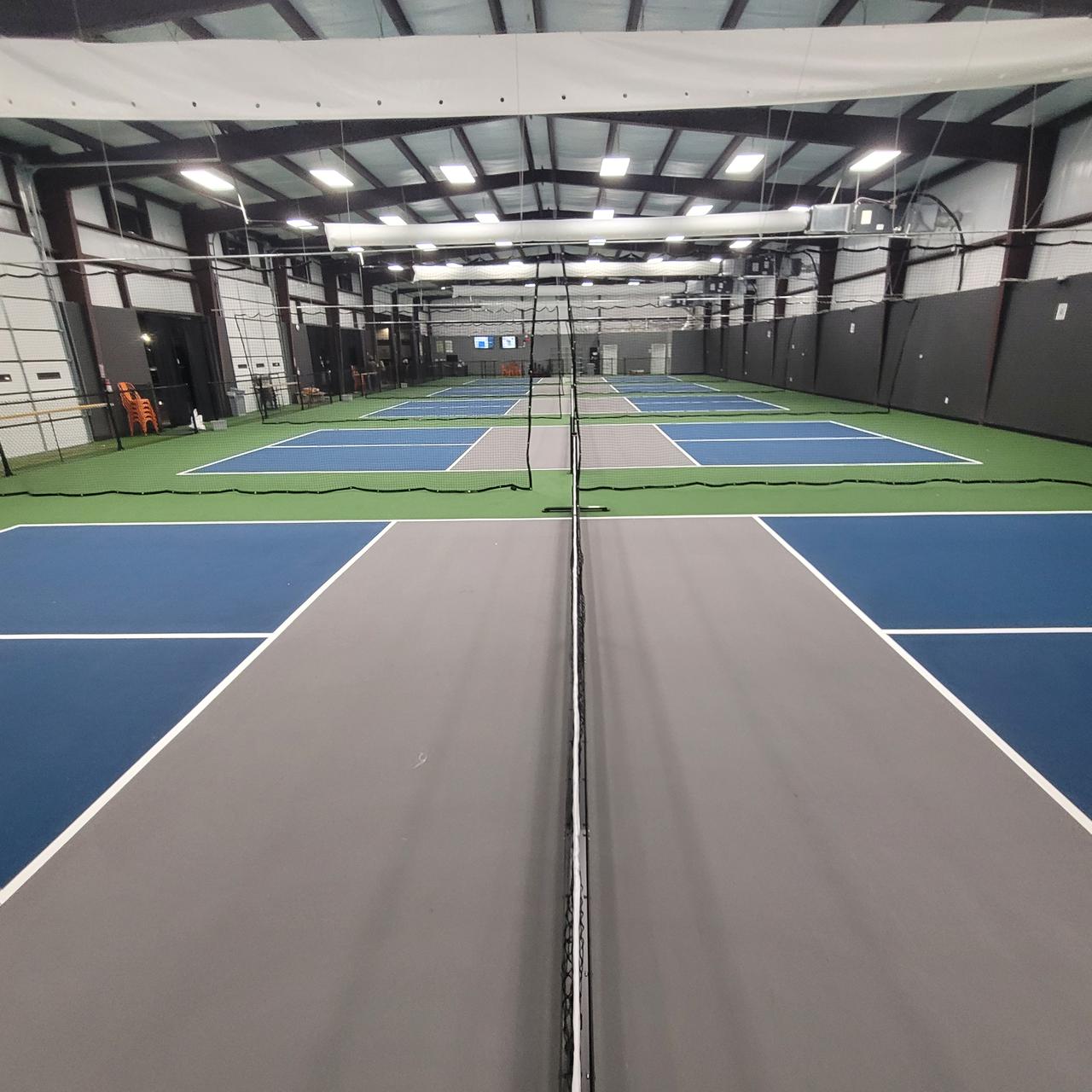
Delivering indoor court surfacing with thorough slab prep, crack repair, precise surface profiling, and proper conditioning — all to ensure long-lasting acrylic performance in high-use facilities.
Indoor courts require controlled surface preparation, moisture evaluation, and precise acrylic installation. We build and resurface indoor pickleball, tennis, and basketball courts for private, commercial and institutional facilities.
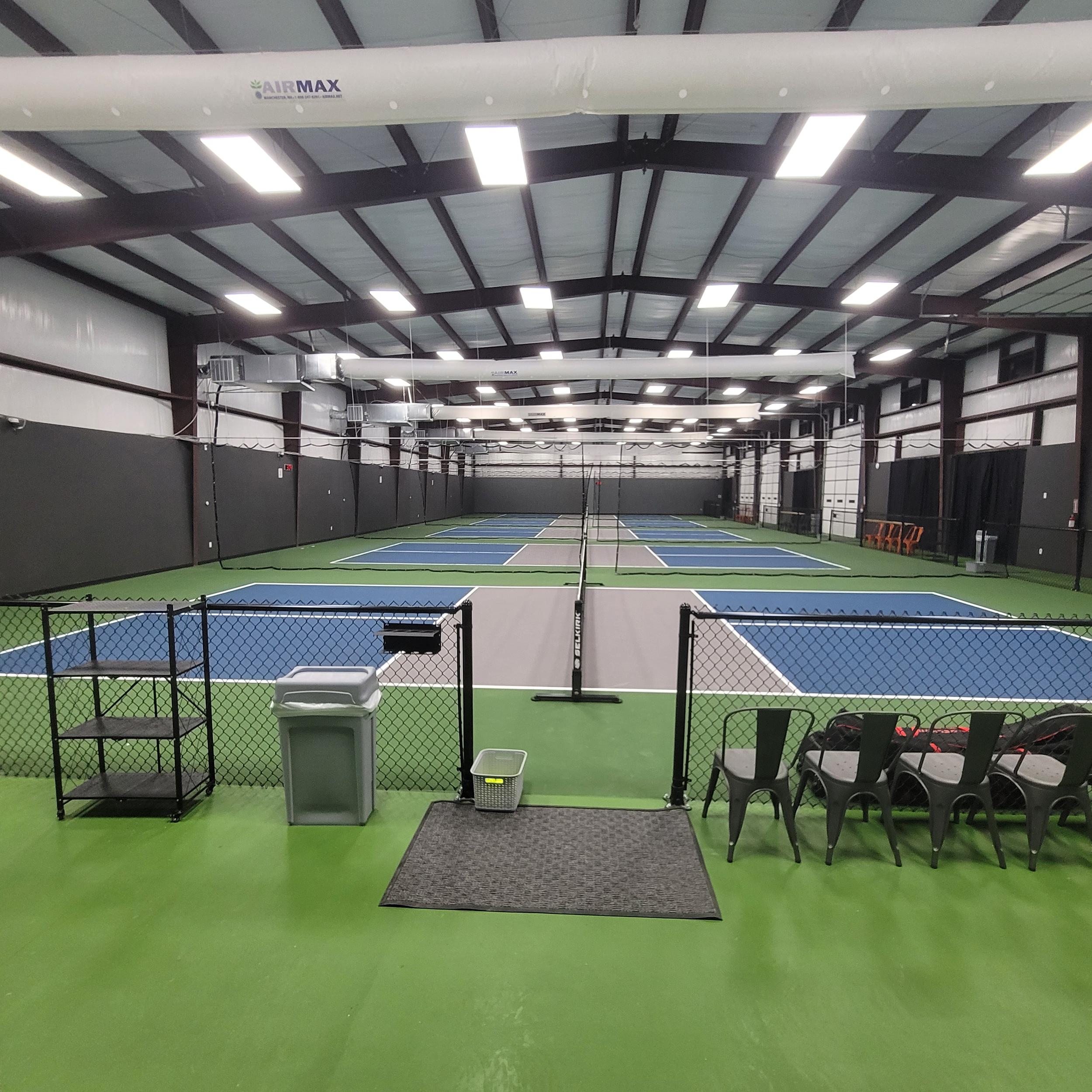
Indoor Pickleball Couirt Facility 2 - Fort Worth Texas
Indoor Pickleball Now - Built March 2024
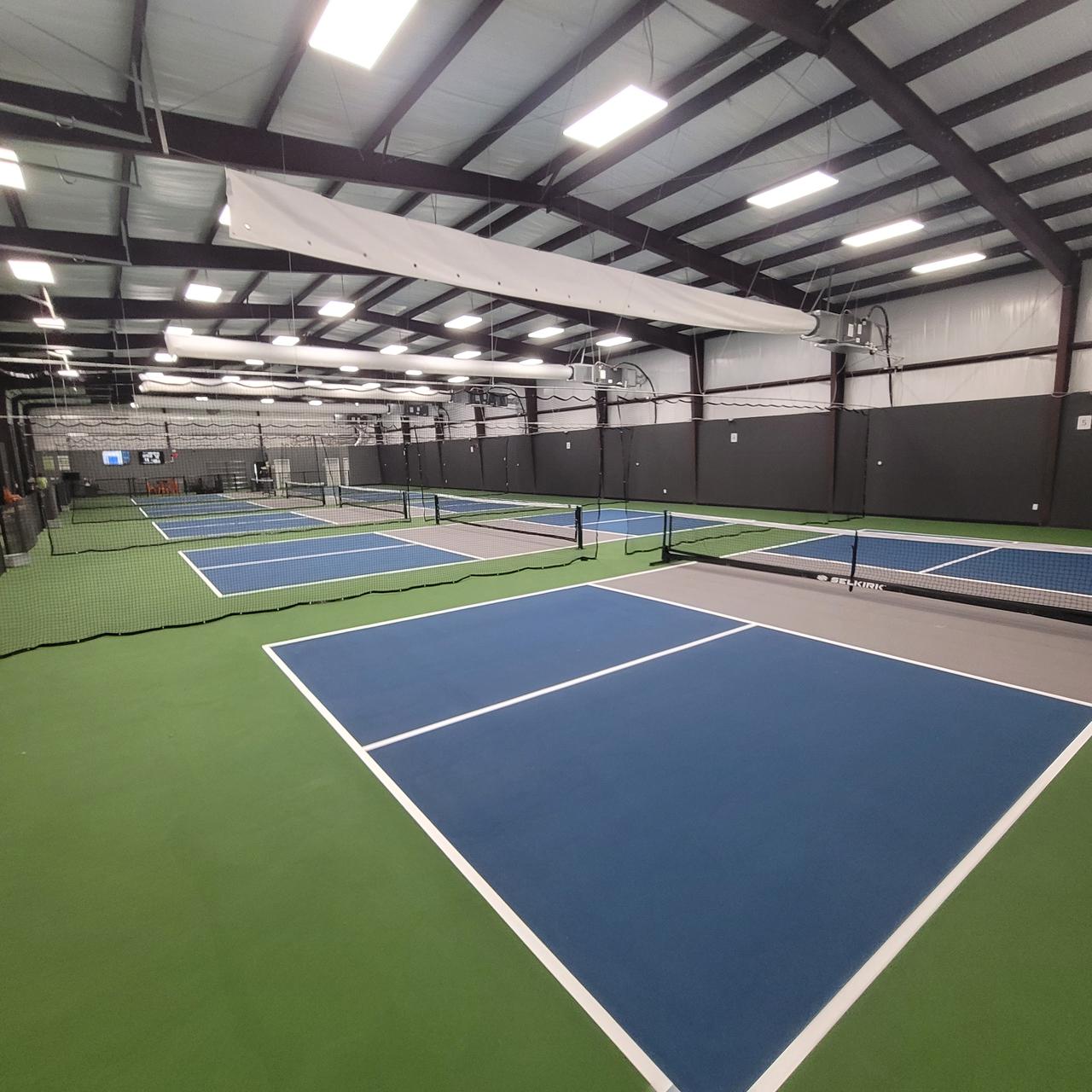
Indoor facilities demand tighter tolerances, moisture control, and disciplined preparation to ensure long-term adhesion and consistent play.
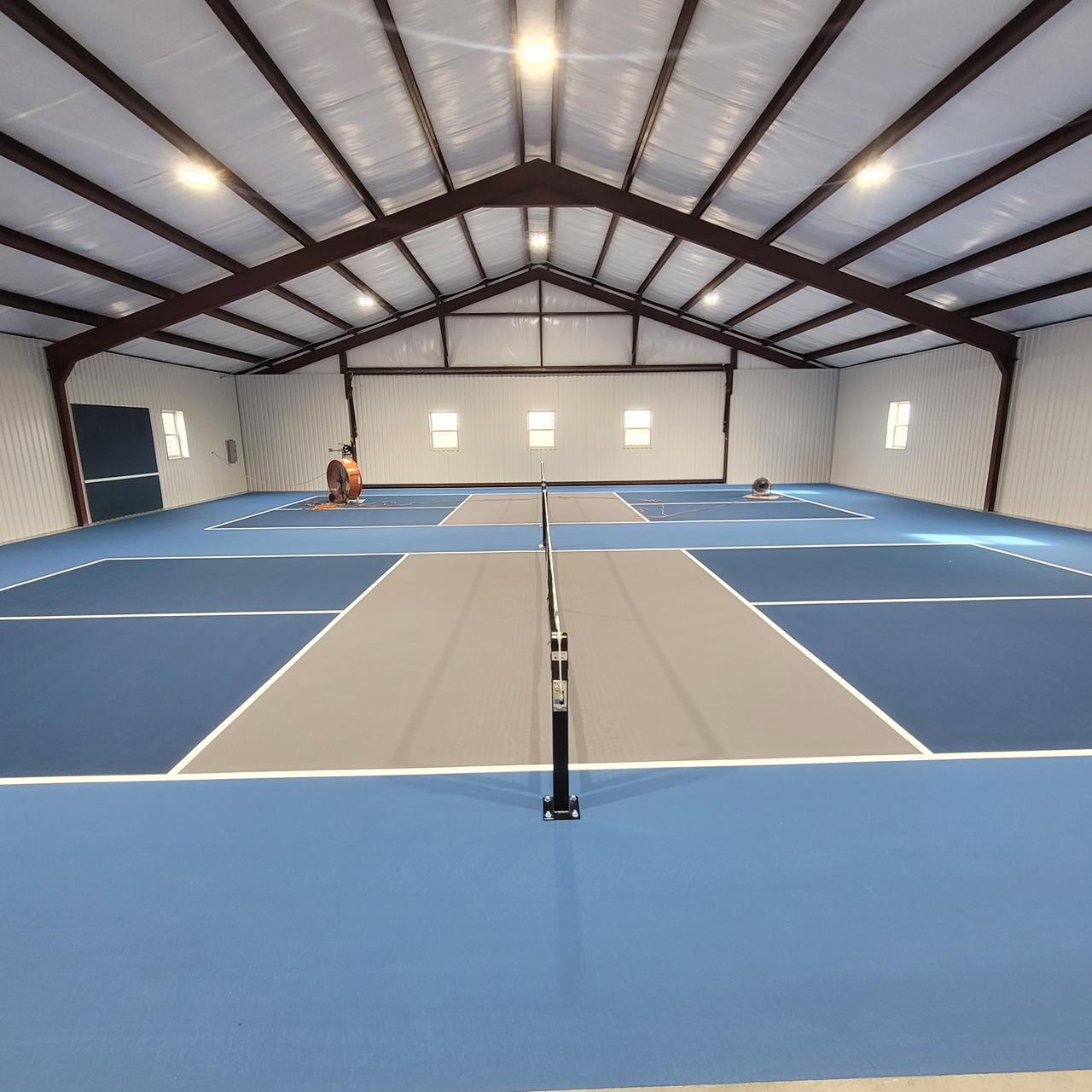
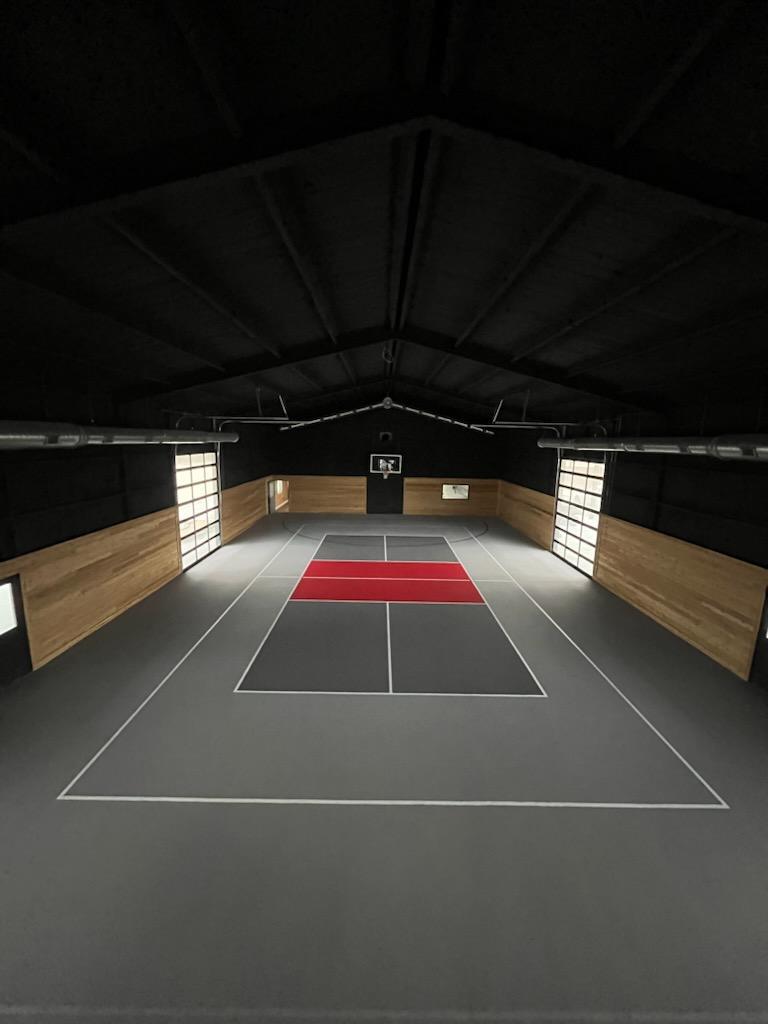
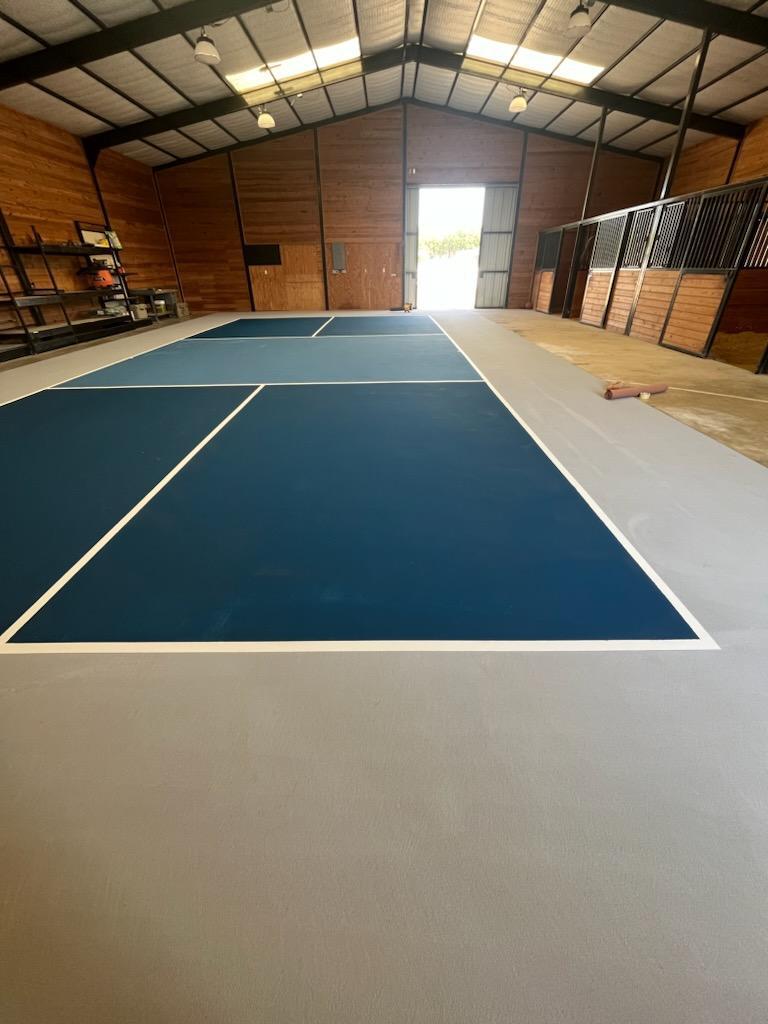
Construction and resurfacing practices align with industry standards recognized by the American Sports Builders Association (ASBA)
Indoor court pricing is driven primarily by slab condition — not court size. Most courts are similar in dimension, but surface prep requirements vary significantly.
Nearly all indoor conversions require mechanical grinding or shot blasting to achieve the proper concrete surface profile (CSP) for acrylic adhesion. Crack repair at expansion joints and saw cuts is also common. Multi-court projects typically reduce per-court cost compared to single-court installations.
We provide project-specific quotes after reviewing slab condition and facility layout.
Project duration depends on:
• Number of courts
• Amount of surface preparation required
• Facility ventilation and drying conditions
Mechanical surface preparation and crack repair are completed first, followed by the acrylic surfacing system. Indoor dry times vary based on airflow and humidity levels, which can extend or compress schedule windows.
Most projects are scheduled to minimize disruption to facility operations.
Proper preparation is critical for long-term performance.
Indoor slabs are typically steel-troweled and often sealed. These surfaces must be mechanically ground or shot blasted to remove sealers and achieve the correct concrete surface profile (CSP) for adhesion.
Without proper profiling, acrylic coatings can delaminate or wear unevenly. Surface preparation also includes crack repair and detailed cleaning before installation begins.
Manufacturers typically rate properly installed indoor acrylic systems for approximately five years under normal use.
Actual lifespan depends on:
• Volume of play
• Maintenance practices
• Facility conditions
Higher usage facilities will naturally experience more wear and may require earlier resurfacing.
Technically yes — but it will not perform like a professional acrylic athletic surface.
Standard paints do not bond properly to sealed or steel-troweled concrete without mechanical preparation. They typically wear quickly, look inconsistent, and do not provide the texture or play characteristics required for athletic performance.
A properly prepared and installed acrylic system is designed specifically for court durability and consistent ball response.
We install professional-grade acrylic athletic surfacing systems designed for indoor court applications. These systems are formulated for:
• Proper adhesion to prepared concrete
• Consistent texture and ball response
• Durability under athletic use
We do not use consumer or hardware-store coatings.
Indoor installations differ primarily in slab condition and drying environment.
Most indoor facilities have steel-troweled concrete with sealers that must be mechanically removed prior to coating. Proper surface profiling is critical.
Dry times also vary more indoors due to limited airflow and ventilation compared to outdoor installations.
Indoor projects require careful scheduling and coordination within active facilities.